
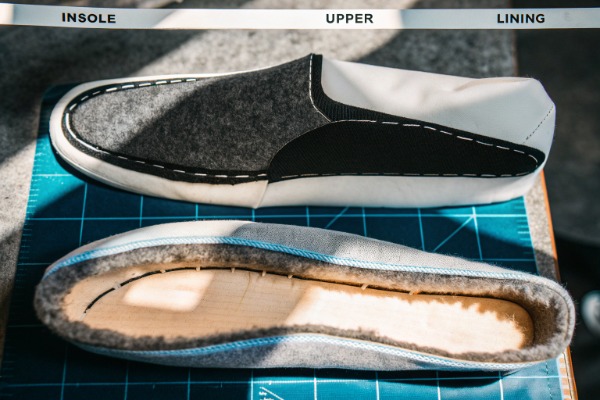
At our factory, we see clients struggle with floppy uppers or hard insoles daily. Choosing the wrong felt gauge ruins a great shoe design before production even starts.
For optimal performance, specify 5mm to 8mm felt for insoles to ensure shock absorption. Use 3mm to 5mm for uppers to balance structure with flexibility, and select 1mm to 2mm for linings to maximize moisture-wicking without adding bulk.
Let's break down the exact specifications you need for durable, comfortable footwear.
What is the best wool felt thickness for manufacturing durable insoles?
When we test prototypes, thin insoles compress too quickly, leading to customer complaints about foot fatigue. Durable support requires precise density calculations to handle long-term weight distribution.
The best thickness for durable insoles is typically 5mm to 8mm. This range provides necessary thermal insulation and cushioning while accounting for the 15-20% compression set that occurs during the initial break-in period.
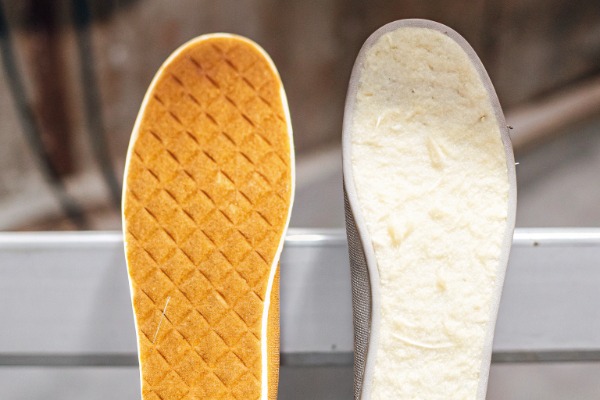
When designing insoles, you must account for the physical forces the material will endure. In our production experience, the insole is the component that faces the highest stress. It bears the full weight of the wearer and the friction of walking. If you select a felt that is too thin, it will bottom out within weeks, leaving the wearer with zero protection against the hard outsole.
Understanding Compression Set
One critical factor we emphasize to our clients is "compression set." Wool is a natural fiber. Under constant pressure and body heat, the fibers compact. A 5mm insole might eventually compress down to 4mm after a month of daily wear. Therefore, we often advise starting with a slightly thicker gauge than your target final thickness. If your design requires a 5mm cushion, we might manufacture the felt at 6mm or increase the density to compensate for this inevitable loss of volume.
Density vs. Thickness
Thickness is not the only metric. You can have a thick piece of felt that is fluffy and weak, or a thin piece that is rock hard. For insoles, we recommend a high-density specification. A density of around 0.30 g/cm³ to 0.40 g/cm³ ensures that the 5mm thickness provides actual support rather than just soft fluff. This combination of high density and adequate thickness creates a "memory foam" effect using natural wool.
Layering Strategies
Some of our most successful B2B clients use a composite approach. They bond a high-density 3mm base layer for structure with a lower-density 3mm top layer for immediate step-in comfort. This creates a 6mm total thickness that offers the best of both worlds: durability and softness.
| Insole Application | Recommended Thickness | Recommended Density | Key Feature |
|---|---|---|---|
| Winter Boots | 6mm – 8mm | High (0.35 g/cm³) | Maximum thermal insulation from cold ground. |
| Indoor Slippers | 5mm – 6mm | Medium (0.28 g/cm³) | Soft cushioning for comfort on hard floors. |
| Athletic/Casual | 3mm – 4mm | Very High (0.40 g/cm³) | Structural stability and shock absorption. |
How does the density of felt lining affect comfort in my shoe designs?
A rough, dense lining causes blisters, while a loose one wears out fast. We constantly adjust fiber ratios to find that sweet spot for our clients' interior comfort.
diameter of the wool fiber 1
Density directly impacts softness and moisture management. A lower density felt (0.18–0.25 g/cm³) around 1mm to 2mm thick offers the best comfort, allowing for efficient wicking and preventing friction blisters against bare skin.
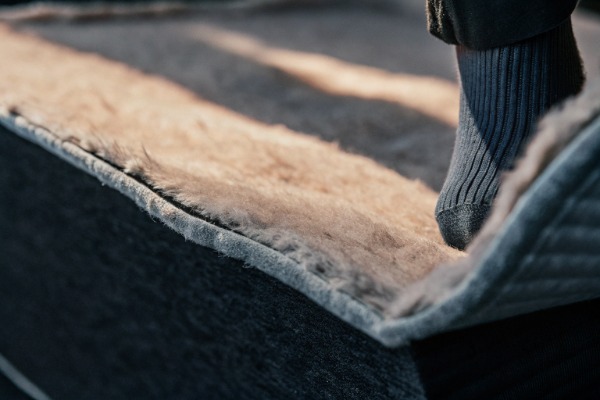
The lining of a shoe is the intimate layer. It sits directly against the sock or the bare foot. In our manufacturing process, we treat lining specifications very differently from structural components. While an insole needs to be tough, a lining needs to be forgiving. If the density is too high, the material becomes abrasive. We have seen designs fail because the lining was as dense as the upper, creating a "sandpaper" effect on the wearer's heel.
Skiving is the process 3
The Friction Factor
Comfort is largely about reducing friction. A lower density felt allows the fibers to have some movement. This softness reduces the shear force against the skin. When we produce lining felt, we often use finer wool fibers (lower micron count) mixed with a specific density target. A 1.5mm lining with a density of 0.20 g/cm³ feels luxurious and soft. It conforms to the foot's irregularities rather than resisting them.
Volume Management
Designers often forget that lining takes up space inside the shoe. If you use a 3mm lining, you are reducing the internal volume of the shoe significantly. This forces you to adjust your lasting allowance. A thinner, 1mm to 2mm lining provides the necessary barrier without altering the fit of the shoe drastically. It covers the internal seams and rough edges of the upper without making the shoe feel tight.
Moisture Wicking Efficiency
Density also affects how moisture moves. A extremely dense felt can trap moisture on the surface because the fibers are packed too tightly for air to circulate. A medium-density lining allows sweat vapor to pass through the matrix of the wool, pulling it away from the foot. This is vital for maintaining a dry, blister-free environment.
| Density Level | g/cm³ Range | Tactile Feel | Best Use Case |
|---|---|---|---|
| Low Density | 0.18 – 0.22 | Soft, fluffy, pliable | Tongues, collar padding, luxury slipper linings. |
| Medium Density | 0.23 – 0.28 | Smooth, firm but flexible | Standard shoe linings, heel grips. |
| High Density | > 0.30 | Hard, board-like | Structural reinforcement (not recommended for lining). |
Can I request custom thickness samples for shoe uppers from suppliers?
Guessing the stiffness of an upper often leads to wasted production runs. We encourage testing because standard stock sheets rarely fit unique design requirements perfectly.
shoe last 4
Yes, professional suppliers allow you to request custom thickness samples. We recommend ordering a range, such as 3mm, 4mm, and 5mm, to physically test how the material behaves during the lasting process and structural formation.
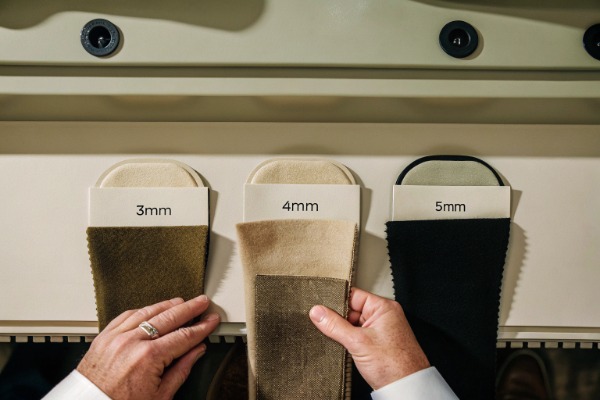
The upper is the face of your shoe. It defines the style and holds the foot in place. Choosing the thickness for the upper is a balancing act between structure and flexibility. In our factories in China and South Korea, we often send out "sample kits" containing the same wool blend in stepped thicknesses (e.g., 3.0mm, 3.5mm, 4.0mm). Why? Because on paper, 0.5mm seems negligible. In your hand, it changes the entire drape and stiffness of the shoe.
friction blisters 6
The "Lasting" Challenge
When you pull the upper over the shoe last (the mold), the felt needs to stretch slightly without tearing. If the felt is too thick (over 5mm), it becomes difficult to mold around the toe box and heel without creating bulky wrinkles. If it is too thin (under 3mm), it may collapse and fail to hold the shoe's shape once the last is removed. We advise clients to test the material on their specific machinery. A 3mm felt might work for a casual loafer, but a boot might demand 4mm to stand upright.
Skiving and Edge Treatment
Another reason to sample different thicknesses is to test "skiving." Skiving is the process of shaving down the edges of the felt where panels overlap, so you don't get a double-thickness bulge at the seam. Thicker felts (4mm+) are easier to skive cleanly. Thinner felts can sometimes tear or fray during this process. By testing samples, your production team can determine which thickness processes best on your equipment.
Pressed vs. Needle-Punched
For uppers, we generally recommend "pressed" wool felt over needle-punched varieties. Pressed felt has a non-directional fiber orientation. This means it doesn't stretch out of shape as easily as woven fabrics. When you request samples, ensure you are asking for the correct manufacturing method, as this affects how the thickness performs under tension.
Customization Options
We can customize not just the thickness, but the blend. A 3mm felt made of 100% wool behaves differently than a 3mm felt made of 70% wool and 30% polyester. The synthetic blend might be stiffer and more durable, while the pure wool is softer and molds better.
Which wool felt specifications work best for breathable shoe linings?
Trapped sweat ruins the user experience quickly. In our lab, we see that overly thick or synthetic-heavy linings block airflow, turning shoes into ovens.
thermal insulation 7
For maximum breathability, select 100% wool felt with a thickness of 1.5mm to 2mm. Avoid high synthetic blends, as natural wool fibers naturally regulate temperature and wick moisture away from the foot more efficiently than polyester composites.

Breathability is the superpower of wool. However, you can negate this benefit by choosing the wrong specifications. In our export experience, particularly to humid regions like Vietnam, we see that the chemical makeup of the felt is just as important as the thickness.
compression set 9
The Synthetic Trap
Many manufacturers try to cut costs by using a felt lining with a high percentage of polyester (e.g., 50% wool / 50% synthetic). While this is cheaper, synthetics are essentially plastic. They do not absorb moisture; they trap it. For a lining, which sits against the skin, this creates a clammy environment. We strongly advise using at least 80% to 100% wool for linings. The natural keratin protein in wool absorbs moisture vapor—up to 30% of its weight—and releases it into the air, keeping the foot dry.
Thickness and Airflow
There is a direct correlation between thickness and thermal retention. A 3mm lining is great for a snow boot because it traps a lot of dead air, acting as insulation. But for a standard shoe, 3mm is too hot. A 1.5mm to 2mm lining provides enough substance to be durable but is thin enough to allow heat to escape. It facilitates the transfer of moisture from the inside of the shoe to the upper material, where it can evaporate.
Micron Count Matters
For linings, the "micron" (diameter of the wool fiber) is crucial. Coarse wool (29 microns) is itchy and better for insoles. Fine wool (19-21 microns) is soft and breathable. Finer fibers pack together in a way that allows for capillary action—drawing liquid away from the source. When specifying your lining, ask for "Merino grade" or fine wool blends to ensure that the breathability comes with tactile comfort.
| Feature | 100% Wool Lining | 50/50 Blend Lining | Synthetic Felt Lining |
|---|---|---|---|
| Breathability | Excellent | Moderate | Poor |
| Moisture Wicking | High | Medium | Low |
| Odor Resistance | High (Natural) | Medium | Low (Traps odors) |
| Cost | Premium | Mid-range | Budget |
Conclusion
Selecting the right felt thickness—8mm for insoles, 4mm for uppers, 2mm for linings—ensures your footwear balances durability with comfort.
Wool is a natural fiber 10
Footnotes
1. Explains the standard measurement unit for wool fineness. ↩︎
2. Identifies the biological component responsible for wool’s absorption properties. ↩︎
3. Explains the specific manufacturing technique for reducing edge thickness. ↩︎
4. Defines the essential mechanical mold used in shoemaking. ↩︎
5. Explains the textile science behind managing liquid and vapor. ↩︎
6. Authoritative health source explaining the cause of blisters. ↩︎
7. Explains the physics of heat retention mentioned for winter boots. ↩︎
8. Provides context for the viscoelastic effect compared in the text. ↩︎
9. Explains the technical term regarding material deformation under load. ↩︎
10. Defines the core material and its biological origin. ↩︎
