Get Exclusive Purchase Tips

We will continue to update the product information so that customers understand our products.

If you want to get the latest product information, please leave your email, we will not send any other. Thank you.

The Role of Wool Felt in Acoustics: How This Simple Material Can Enhance Soundproofing in Homes and Offices

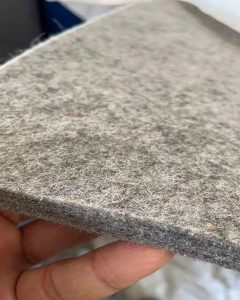
In the quest for quieter and more productive environments, both at home and in the office, the importance of effective soundproofing cannot be overstated. Noise pollution can lead to stress, reduced concentration, and lower productivity. While many advanced materials are available for soundproofing, wool felt, a simple and versatile material, has gained attention for its potential to improve acoustic conditions. This article explores the role of wool felt in acoustics and how it can be used to enhance soundproofing in various settings. Understanding the Acoustic Properties of Wool Felt Wool felt is a non-woven textile material made by matting, condensing, and pressing wool fibers together. Its acoustic properties stem from its ability to absorb and dissipate sound waves. The densely packed fibers of wool felt create numerous air pockets that can trap sound waves, converting their energy into heat. This process is known as sound absorption, and it is particularly effective for reducing mid and high-frequency noises. Sound Absorption and Noise Reduction Wool felt has been shown to have a significant sound absorption coefficient, especially for mid and high-frequency sounds. In fact, studies have found that wool felt can attenuate sound pressure levels by between 1 dB and 10 dB. This makes it an excellent material for reducing echo and reverberation in rooms, creating a more comfortable acoustic environment. The Difference Between Soundproofing and Sound Dampening It is important to distinguish between soundproofing and sound dampening. Soundproofing refers to the complete blocking of sound transmission, while sound dampening involves reducing the amount of sound that reverberates within a space. Wool felt is more effective as a sound-dampening material rather than a soundproofing one. It can significantly reduce the amount of noise that bounces around a room, making it quieter and more conducive to activities that require concentration. Practical Applications of
Continue Reading

Coarse Wool Felt: The Perfect Choice for DIY Enthusiasts

Are you a DIY lover looking for a versatile, eco-friendly, and easy-to-shape material? Look no further than coarse wool felt! This amazing material has become increasingly popular among crafters and artists for its unique properties and wide range of applications. What is Coarse Wool Felt? Coarse wool felt is a type of felt made from thick and short wool fibers. Unlike fine wool, these fibers are more robust and have a coarser texture, making them ideal for various crafting projects. The wool fibers are pressed and matted together through a process called felting, which involves agitation and moisture to create a dense and durable material. Why Choose Coarse Wool Felt for DIY Projects? Easy to Shape: One of the most significant advantages of coarse wool felt is its malleability. It can be easily molded and shaped into various forms, making it perfect for beginners and experienced crafters alike. Whether you are creating soft toys, bags, or decorative items, this material allows you to bring your creative ideas to life with ease. Rich Colors: Coarse wool felt is available in a wide range of vibrant colors. This makes it an excellent choice for projects that require a touch of brightness and personality. From bright reds and blues to soft pastels, you can find the perfect shade to match your design vision. Eco-Friendly: Wool is a natural and renewable resource, making coarse wool felt an environmentally friendly option. By choosing this material, you can enjoy your crafting while also being mindful of the planet. Versatility: Coarse wool felt is not just limited to traditional crafting. It can be used for a variety of applications, including home decor, fashion accessories, and even industrial uses. For example, it can be crafted into cozy felt slippers, stylish bags, or unique wall decorations. Popular DIY Projects

Continue Reading

Wool Felt and Synthetic Felt in Car Interiors: A Comprehensive Guide

Car interiors play a crucial role in providing comfort, aesthetics, and functionality. Among the various materials used, wool felt and synthetic felt are popular choices due to their versatility and durability. This article explores the differences between wool and synthetic felt, their applications in car interiors, and their benefits. What is Felt? Felt is a non-woven fabric made by compressing fibers together to form a dense, durable material. It is widely used in automotive applications due to its excellent sound absorption, insulation, and cushioning properties. Wool Felt vs. Synthetic Felt: Key Differences 1. Composition Wool Felt: Made from natural wool fibers, often blended with other natural fibers for enhanced durability. Synthetic Felt: Manufactured using synthetic fibers like polyester, acrylic, or polypropylene. 2. Durability Wool Felt: Highly durable, naturally resilient, and can withstand high temperatures. Synthetic Felt: Resistant to moisture, chemicals, and wear, making it ideal for long-term automotive use. 3. Environmental Impact Wool Felt: Biodegradable and eco-friendly, but may require more maintenance. Synthetic Felt: Non-biodegradable but often more cost-effective and easier to produce. Applications of Felt in Car Interiors 1. Soundproofing and Noise Reduction Felt is used as an insulating layer to reduce engine noise, road vibrations, and interior echoes. Commonly applied in door panels, under the dashboard, and around the engine compartment. 2. Upholstery and Padding Provides a soft, durable backing for seats, armrests, and headliners. Enhances comfort and aesthetics while protecting the underlying structure. 3. Thermal Insulation Felt acts as an insulator to regulate cabin temperature, preventing excessive heat or cold penetration. Often found in roof linings and undercarpet layers. 4. Filtration and Ventilation Components Used in air filtration systems to trap dust, pollutants, and debris. Helps improve air quality inside the vehicle. 5. Decorative and Functional Trims Felt is used for aesthetic trims, dashboard linings, and other

Continue Reading

Colored Wool Tops for Needle Felting: A Creative Guide

Needle felting is a delightful and therapeutic craft that has gained popularity in recent years. It involves using a special barbed needle to sculpt wool fibers into various shapes and forms. One of the essential materials for this craft is colored wool tops, which are the unspun fibers that form the basis of your creations. In this article, we will explore the world of colored wool tops for needle felting, including their benefits, how to choose the right colors, and some creative ideas to get you started. What Are Wool Tops? Wool tops are the raw, carded wool fibers that have been cleaned and combed into a uniform, fluffy mass. They are not spun into yarn, which makes them perfect for needle felting. The fibers are long and can be easily manipulated, allowing for a wide range of textures and details in your felted creations. Benefits of Using Colored Wool Tops Versatility: Wool tops come in a vast array of colors, allowing you to create anything from vibrant, colorful scenes to more subtle, natural-looking projects.Texture: The texture of wool tops adds depth to your felted pieces, making them more tactile and visually interesting.Blendability: You can easily blend different colored wool tops to create unique shades and gradients.Durability: Wool is a strong and durable fiber, making your finished projects long-lasting.Choosing the Right Colors When selecting colored wool tops for your needle felting projects, consider the following: Project Theme: Choose colors that complement the theme of your project. For example, if you’re creating a landscape, you might need greens for grass, blues for the sky, and browns for trees.Personal Preference: Select colors that you enjoy working with and that inspire you.Quality: Look for high-quality wool tops that are free from debris and have a consistent color throughout.Creative Ideas for Using Colored Wool

Continue Reading

Embracing the Resilience of Carbonized Wool—A Journey from Fiber to Fashion

Introduction In the realm of natural fibers, wool has long been celebrated for its warmth, natural water-repellence, and enduring comfort. However, the introduction of carbonized wool into the textile industry has marked a significant evolution. This innovative process enhances the wool’s inherent qualities, making it an even more attractive option for discerning consumers. Let’s delve into the world of carbonized wool, exploring its definition, benefits, and distinctive characteristics of garments crafted from this resilient fiber. Chapter 1: Understanding Carbonized Wool Carbonized wool is the result of a meticulous process where raw wool is subjected to controlled heat in an oxygen-deficient environment. This unique treatment, known as carbonization, alters the wool’s chemical structure, reducing its susceptibility to shrinkage and felting. The outcome is a fiber that retains wool’s natural allure while gaining a fortified edge against the elements. Carbonized wool is not only more robust but also boasts improved resistance to environmental stressors, positioning it as a premier choice for high-quality yarn production. Chapter 2: The Advantages of Carbonized Wool Yarn The decision to opt for carbonized wool in yarn production is driven by its superior qualities. The carbonization process imbues the wool with a greater resistance to the rigors of everyday wear, making it an ideal candidate for long-lasting garments. This type of yarn is also more manageable, reducing the risk of distortion during manufacturing. For those who appreciate the allure of natural fibers but desire a fabric that can withstand the test of time, carbonized wool yarn is the perfect compromise between nature and durability. Chapter 3: The Distinctive Features of Carbonized Wool Garments Garments woven from carbonized wool yarn stand out for their exceptional characteristics. They offer a blend of strength and softness, providing a comfortable fit that is kind to the skin. The natural insulating properties of

Continue Reading

How to find a perfect wool blanket?

What is a wool blanket? A wool blanket is a decorative comforter made from natural wool fiber, which can add warmth. What kinds of wool are suitable for making wool blankets? Lamb wool Lamb wool is great for a more luxurious wool feel. This wool is typically shorn from lambs that are not yet twelve months old, which is super soft. So the lamb wool blankets tend to be thinner and lighter and warmer. Combed sheep wool The scoured wool is carded by a machine to get combed sheep wool in different microns. For making wool blankets, the combed sheep wool can be white color or natural grey color. The finer micron wool you choose, the softer wool blanket it is. Scoured wool The raw wool is sheared from sheep mainly in spring or Autumn. After shearing the wool, it contains oil, grass, and other vegetable matters. Before using the wool in production, Workers will scour the wool into hot water and then dry it. After it, the workers will make a selection to get suitable wool for a blanket. Cashmere Cashmere comes from goats who live in the Kashmir mountains, the micron is finer and softer. Because the output of cashmere is very less, cashmere is regarded as luxury wool. Camel hair Camel’s hair is shearing from camels, it has natural camel color or tan,  with a good hand touch. Camel’s hair is considered one of the insulating fibers for making a wool blanket, its hand touch is silky with a smooth surface. The advantages of wool blanket Wool blankets are durable and desirable in all bedding products. Because it was used natural fiber, it has good features. 1. Wool is a natural fiber, it is biodegradable ; 2. It can absorb moisture, supply you with a comfortable temperature, neither too hot

Continue Reading

HOW TO CHOOSE FIBER FOR A QUILT?

People used to be using cotton as the filling of quilts, its low loft tends to give you a flat quilt. Also, some people use polyester and down for quilts. Wool fibers are a good choice for your quilt if you’re looking for the warmest filler. It’s incredibly soft and suitable for hand quilting and machine stitching. While cotton/ polyester and down quilts have their advantages, wool bedding performs better and improves sleep efficiency for most people in both warm and cool climates.  Wool is a higher loft batting and can be quilted heavily without any loss of flexibility. As wool is one natural fiber, it has the feature of light and moisture absorption that can adjust the temperature to a comfortable one. So how to choose the wool for quilt batting? There are some types of wool for your choice. 1. Carded sheep wool/sheep wool combings For this wool, it is carded by a machine to separate the wool into different microns, the micron range is from 18.5micron to 30micron. Before making the wool into wool batting, the wool will be scoured with hot water. After washing the wool, the white color will be more bright, the oil content is very less than the international standard. People choose different microns of wool on the basis of their quilt orientation. The finer micron of carded wool, the higher price is. The finner wool batting, the softer the hand touch it is. 2. Carbonized wool The wool being carbonized process, its protein will be destroyed, and there will be almost no vegetable matter. Using carbonized wool for wool quilts is more durable. Also, because the length is longer, it is more fluffy. 3. Camel hair Except for wool, people also like camel hair for quilt batting. The camel hair can be from 20micron to 30micron. No matter carded wool, carbonized

Continue Reading

The wool felt- wool insulated packaging felt-1

Today we are talking about the wool insulated packaging felt, for this felt, is made from 100% sheep wool. People usually use natural brown coarser wool for making this kind of wool felt, as the cost is cheap compared with white color wool in the same micron. The raw wool was washed through hot water by soap first and then carded scoured wool by machine to get fleece wool, This fleece wool will be needled by machine to get the needle felt in different thicknesses. According to different sizes of the box requests, the felt will be cut into different sizes. Finally, cover the felt liner with MDPE, HDPE which can be dissoluble. So where does such wool-insulated packaging felt bag used for? It is usually used for transporting sensitive temperature goods, such as cold chain products, fresh fruits transportation, frozen food transportation, pharmaceutical product…… the list goes on. Can somebody doubt it? Why use such wool-insulated packaging felt bags for transportation? As we know there are too many plastic bags appearing in our daily life. And polystyrene can not be compostable, this is harmful to the environment. In order to protect the world, more and more people have started using insulating packaging which can be compostable. The wool felt packaging is a perfect choice. As the wool is 100% natural fiber, it benefits itself elasticity and its crimp factor, it can offer impact resistance and cushion to goods in transit, and it provides crash protection during transportation. The wool fiber’s outstanding insulating properties are superior to polystyrene. Except for the above good features, It has many good features as below. The wool is environmental; The wool is a good hygroscopic material; The wool is renewable and biodegradable; The wool is good at absorbing moisture and keeping the good at a good

Continue Reading

Nine different types of wool felt

What is wool felt? Wool felt is a nonwoven textile made of natural fibers or synthetic fibers. The wool felt can be needle felt and pressed felt, depending on what is the final usage. In view of the wool features as below: . 100% natural fibers, . environmental, .good hygroscopic, . can be compostable .Renewable and biodegradable .can be absorbing moisture from the air Wool products are widely used in people’s daily life. Wool felt is one of the uses of wool. As below are some different types of wool felt for your reference. 1. Wool insulation felt For this felt, it is usually made of coarser wool fiber. When you build your house, you can put the wool felt inside the wall. This felt can help absorb harmful chemicals, manage the moisture, absorbing and reduce the noise. Using this wool insulation felt, you will get a more pleasant house to live in. 2. Insulated wool packaging For this felt, it is widely used for transporting fresh fruits and frozen food. In the past, the widespread use of plastic packing, cause big pollution for the world. Nowadays, people gradually realize that we should reduce even the use of plastic packaging to protect the earth. With the aim of protecting the world’s environment, more and more companies are trying to use this eco-friendly wool felt packaging to eliminate plastic from supply chains.  Because such wool felt is made 100% wool, it has good features as below for packaging: 1) These wool felts are made of 100% natural fiber wool, which is biodegradable, compostable, and sustainable; 2) This wool felt liner is micro-perforated to allow the wool fibers to breathe and create a natural cooling system, which can keep the fruits or frozen food below 5 degrees for well over 24 hours and between 2 degrees and

Continue Reading

Ask for a quote

Welcome your inquire. You will get our quotation within 24 hours.

Get a free sample